
Pakistan's Defence Minister Khawaja Asif said this during an international security conference in Munich, Germany.

Modi slammed opposition parties for seeking proof of the damage done by the Indian Air Force in Pakistan's Balakot.
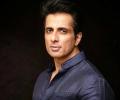
'I went to Nagpur for my engineering. I used to model there, those amateur fashion shows. Then you know, I thought why not try my luck in films and all?'

Against the backdrop of the West Indies team's withdrawal from its tour of India, Rediff.com takes a look at instances when cricket tours have been called off midway through a series.

Jammu and Kashmir Chief Minister Mehbooba Mufti expressed anguish over the loss of lives and stressed the need for peace "if we want to save the people of the state".

The plan hinged on two critical assumptions: India would not be able to replenish supplies quickly to launch a counter-attack. India could not respond in enough strength to dislodge the Pakistanis. Both assumptions would be proved wrong due to the ferocity of the Indian response, reveals former RAW officer Tilak Devasher in his new book, Pakistan At The Helm.
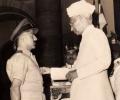
Claude Arpi reveals how Wing Commander Jag Mohan Nath won a second Maha Vir Chakra in the 1965 War.

India boycotted Pak National Day event over invitation to Hurriyat leaders.
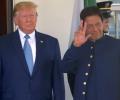
India has not been engaging with Pakistan since an attack on the air force base at Pathankot in January of 2016 by Pakistan-based terrorists, maintaining that talks and terror cannot go together.

Pakistan Peoples Party chief Bhutto, 54, was killed in a suicide attack in Rawalpindi shortly after she had addressed an election rally on December 27, 2007.

We bring you a collection of some of the best photographs taken this week by ace Reuters photographers.

'The message to India is (with attacks like Pathankot) basically what the Pakistani army is trying to test is how serious are you when it concerns the peace process with that country.'

'The Indian Air Force wanted to fight. My squadron leaders and flight lieutenants, all of us were eager to fight. Unless they are keen I can't have confidence.' Marshal of the Air Force, the legendary Arjan Singh, on the 1965 War.
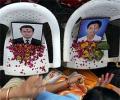
Given the nature of his job, a terrorist heading an underground organisation usually grooms a successor who is prepared to take over in case of his boss's arrest or demise.

'Pakistan's military leaders have to accept that the policy of proxy wars has damaged Pakistan more than it has damaged the enemy,' says former R&AW chief Vikram Sood.
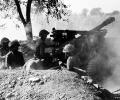
'My brave JCO managed to get to the gun, sit on top of the dead man and fired away at the attacking aircraft till they melted away into the darkness.'

'We don't know what the reasons were that we gave back the Haji Pir Pass which was strategically very important. Today the entire infiltration into Kashmir takes place from that area. If we had retained that post that we had captured, things could have been different.' 'A lesson we need to learn is if you start losing the gains of war at the negotiating table, they become a disincentive for future wars,' says Lieutenant General D B Shekatkar (retd), reviewing the lessons from the 1965 War.
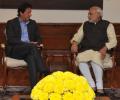
'Any 'de-escalation' that brings down tensions will deprive the BJP of a plank with seamless possibilities to project PM Modi as the 'Iron prime minister' and hype up jingoism in the upcoming election campaign,' notes Ambassador M K Bhadrakumar.

'Pakistan persists in the belief that such attacks will enable it to obtain the territory it covets. Their plans will not succeed.'

Two Taliban suicide bombers struck a historic church in Peshawar Sunday, killing at least 78 people, including women and children, in the deadliest attack on the minority Christian community in Pakistan's history.
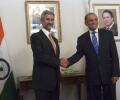
Pakistan's holy trinity -- its government, military establishment and the ISI -- differ on Pakistan's domestic and foreign policy issues. So when India talks to Pakistan's political leadership it can't be sure that the promises can be delivered, says Brigadier S K Chatterji (retd).
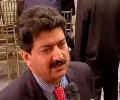
Senior Pakistani TV journalist Hamid Mir, who faced threats from Taliban and other terror groups, was on Saturday shot at in Karachi by 4 unidentified motorcycle-borne gunmen near a bridge on way to his office.

The number of people killed in acts of terror reached a record high last year, with almost four in five of these deaths occurring in just five countries, new research shows.

'ISI-backed jihadi groups like the Jaish-e-Mohammed and Lashkar-e-Tayiba are now prepared to cross the International Border and attack targets in Punjab at will,' says Ambassador G Parthasarathy, India's former high commissioner to Pakistan.

'Will this surgical strike of ours put an end to Pakistani terror?' 'And if not, what will we do when the next terror strike happens?' 'Will there be another surgical strike or will we have to do something bigger?' 'How big does it have to be to get Pakistan to totally stop?'

Civilian and military security forces deployed in Balochistan have done little to investigate attacks on Hazara or take steps to prevent the next attack, says a Human Rights Watch report.

Counting has begun for the election which will be the second democratic transition of power in the nation's 70-year history.

Arrested Lashkar-e-Tayiba bomb-maker Syed Abdul Karim Tunda has told his interrogators that banned Sikh separatist outfit Babbar Khalsa International has deep ties with Pakistan's Inter-Service Intelligence, and is waiting for an opportunity to strike in Punjab. Vicky Nanjappa reports
Nearly 30 IM members are an active part of the terror group behind the suicide attack at Wagah, which is worrying Indian security agencies.
India must watch for signs after Peshawar that Pakistan is waking up to the dangers of Islamism, muses Ajai Shukla

Historian Stanley Wolpert, author of several books on India, passed into the ages recently. We remember Professor Wolpert with Rajeev Srinivasan's March 1997 interview published on the occasion of his controversial book on Jawaharlal Nehru.
'If we had sent a few airplanes (into Tibet), we could have wiped the Chinese out.' 'And everything could have been different in the 1962 War.' 'They did not believe me there was no Chinese air force.' 'Can you imagine what would have happened if we had used the IAF at that time?' 'The Chinese would have never dared do anything down the line.'

The Indian Army, the Border Security Force, Hindu temples and the people of India, all have been targetted by fidayeen from Pakistan.

'General Sam Manekshaw looked from left to right and said, "Gentlemen, I have come to have a look at you. I am taking a good look at your faces. When I come back after the war is over, some faces may not be here".'
Nawaz Sharif may have permitted the trial of Jaish-e-Mohammed terrorists for the Pathankot attack. But this fell apart because of General Raheel Shareef's keenness to make Kulbhushan Jadhav the centerpiece of global attention. Ambassador G Parthasarthy, a former Indian high commissioner to Pakistan, reveals the Pakistan army chief's gambit against India.

A lot of the terrorism that is affecting Pakistan is really a blowback of the Pakistani state's policy of using jihadist groups as instruments of state policy. And unlike some other countries with similar policies, Pakistan doesn't have the benefit of the political and social space for pulling back from the disastrous course, says Sushant Sareen.

What India has failed to acknowledge is that sub-conventional war is the name of the game and irregular forces have emerged with greater strategic value over conventional and even nuclear forces, and reliance purely on conventional force and diplomacy is grossly inadequate, says Lt Gen Prakash Katoch (retired).

A war hero looks back at the men and the moments that forged India's greatest military victory.

Where does the religious preacher and theologian want to take Pakistan?

Even as France mourns the bloodiest terrorist attack for 20 years, let's take a look at some major standoffs witnessed in the past:
